
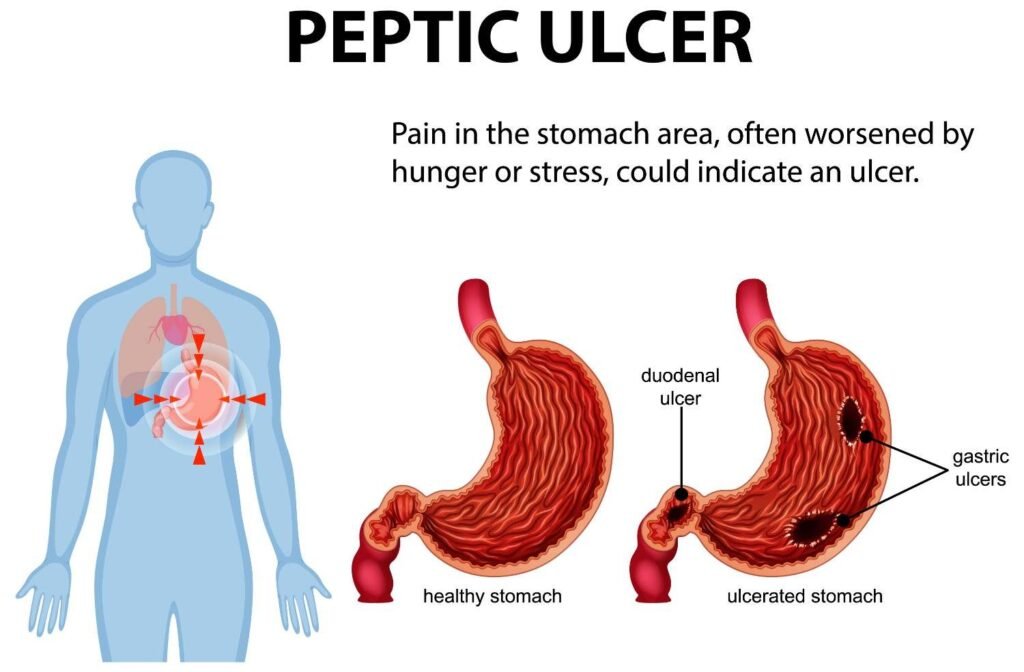

Peptic ulcers can cause persistent stomach discomfort, burning pain, nausea, bloating, and changes in digestion. If these symptoms continue or keep returning, timely medical evaluation is important. Peptic Ulcer Treatment in Pitampura focuses on identifying the underlying cause and choosing appropriate treatment to help the ulcer heal and reduce the risk of complications. Dr. Alokit Gulati provides gastroenterology care with an emphasis on accurate diagnosis and individualized treatment.
For fast information, directly connect with us on WhatsApp
What Is a Peptic Ulcer?
A peptic ulcer is an open sore that develops in the lining of the stomach or the duodenum, which is the first part of the small intestine. Some ulcers may cause noticeable symptoms, while others may remain unnoticed until complications develop.
Common symptoms can include upper abdominal pain or discomfort, nausea, bloating, belching, and feeling unusually full during or after meals. The pattern and severity of symptoms can vary from person to person.
Common Causes of Peptic Ulcers
Understanding the cause is an important part of Peptic Ulcer Treatment in Pitampura. Two of the most common causes are Helicobacter pylori (H. pylori) infection and regular use of nonsteroidal anti-inflammatory drugs (NSAIDs), such as aspirin, ibuprofen, and naproxen.
H. pylori can affect the stomach lining and contribute to ulcer formation. Long-term or frequent NSAID use can also increase the risk of damage to the stomach lining. Your doctor may therefore review your medical history, medications, and symptoms before deciding on the appropriate treatment.
Symptoms That Should Not Be Ignored
Mild stomach discomfort may sometimes be mistaken for acidity or indigestion. However, recurring or worsening symptoms deserve professional evaluation.
You may need to consult a gastroenterologist if you experience:
- Persistent or recurring upper abdominal pain
- Burning or discomfort between the breastbone and belly button
- Nausea or vomiting
- Bloating or frequent belching
- Feeling full unusually quickly
- Symptoms that repeatedly return despite medication
Some peptic ulcers can lead to bleeding or other complications. Black, tarry stools, vomiting blood, vomit that looks like coffee grounds, sudden severe abdominal pain, dizziness, or fainting require urgent medical attention.
Diagnosis for Peptic Ulcers in Pitampura
Effective Peptic Ulcer Treatment in Pitampura begins with an accurate diagnosis. Your gastroenterologist may review your symptoms, medical history, previous ulcer problems, and medicines you are taking.
Testing may be recommended to identify H. pylori infection. Depending on your symptoms and clinical situation, tests can include a urea breath test, stool test, blood test, or upper gastrointestinal endoscopy. Endoscopy allows the doctor to examine the upper digestive tract directly and, when necessary, obtain a small tissue sample for further evaluation.
Peptic Ulcer Treatment in Pitampura
Treatment depends on the cause, severity, and individual medical needs. Medicines that reduce stomach acid, including proton pump inhibitors (PPIs), may be used to support ulcer healing.
If H. pylori infection is identified, treatment generally involves a combination of medicines, commonly including antibiotics and an acid-reducing medicine. Completing the prescribed treatment is important, and follow-up testing may be recommended to confirm that the infection has been successfully treated.
When an ulcer is associated with NSAID use, the doctor may review the need for these medicines and consider alternatives, dose adjustments, or protective treatment where appropriate. Patients should not stop prescribed medicines without discussing the change with their doctor.
Why Timely Ulcer Treatment Matters
Ignoring recurring ulcer symptoms can allow the underlying problem to continue. In some cases, peptic ulcers can cause complications such as bleeding, perforation, penetration, or blockage in the digestive tract. Early evaluation can help identify the cause and allow appropriate treatment to begin.
A personalized treatment plan can also help address factors that may contribute to recurrence. This may include treating H. pylori infection, reviewing medicines that can irritate the stomach, and following the prescribed course of treatment.
Choosing a Peptic Ulcer Treatment Doctor in Pitampura
When looking for the Best Peptic Ulcer Treatment Doctor in Pitampura, consider a specialist who can evaluate both your symptoms and their possible underlying causes. A gastroenterologist can help determine whether your symptoms are related to peptic ulcers or another digestive condition.
Dr. Alokit Gulati focuses on gastroenterology evaluation and treatment, helping patients receive appropriate care based on their symptoms, diagnostic findings, and medical history.
Conclusion
Peptic ulcers should not be managed only by temporarily controlling stomach discomfort. Identifying the underlying cause is an important part of effective treatment and preventing recurrence. Peptic Ulcer Treatment in Pitampura may involve diagnostic testing, medicines to support ulcer healing, H. pylori treatment, or reviewing medicines that may contribute to ulcer formation.
If you have recurring abdominal pain, nausea, or other symptoms associated with peptic ulcers, consult a qualified gastroenterologist for proper evaluation and personalized care.
Frequently Asked Questions
1. What is the most common cause of peptic ulcers?
H. pylori infection and the use of NSAIDs are among the most common causes of peptic ulcers. Your doctor can evaluate your symptoms and medical history to help identify the likely cause.
2. How is a peptic ulcer diagnosed?
Diagnosis may involve a medical history and physical examination, along with tests for H. pylori. In appropriate cases, an upper GI endoscopy may be recommended to examine the digestive tract.
3. Can peptic ulcers be treated with medicines?
Yes. Doctors commonly use medicines that help reduce stomach acid and support ulcer healing. If H. pylori is responsible, a combination of medicines is generally prescribed to eliminate the infection.
4. When should I seek urgent medical care for an ulcer?
Vomiting blood, black or tarry stools, sudden severe abdominal pain, dizziness, or fainting can indicate a serious complication and require urgent medical attention.